2026/04/01 | Andrés Pérez M., Vittorio Peretti, Andrea Tellechea & Ignacio Martínez
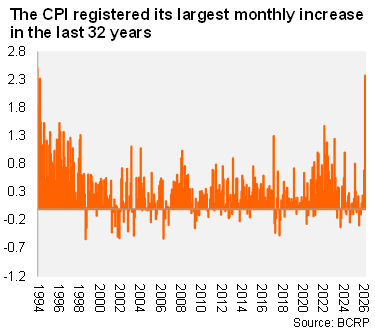
Headline CPI surprised sharply to the upside in March, rising 2.38% MoM, well above both the Bloomberg consensus (1.1%) and the long‑run monthly average (0.73%). The print was driven by transport prices (9.06%; 113 bp contribution), reflecting pass‑through from higher fuel costs amid a surge in global oil prices and temporary gas supply disruptions in early March. Food and non‑alcoholic beverages also posted a strong increase (3.24%; 79 bp contribution), driven by weather‑related supply shocks, including frosts and heavy rainfall.
Education prices also increased markedly (2.93%; 26 bp contribution), in line with the seasonal adjustment in tuition fees. Restaurants and hotels (0.8%; 14 bp contribution) also contributed to the headline inflation print. Meanwhile, core inflation, which excludes volatile food and energy components, was also elevated, rising 2.07% MoM.
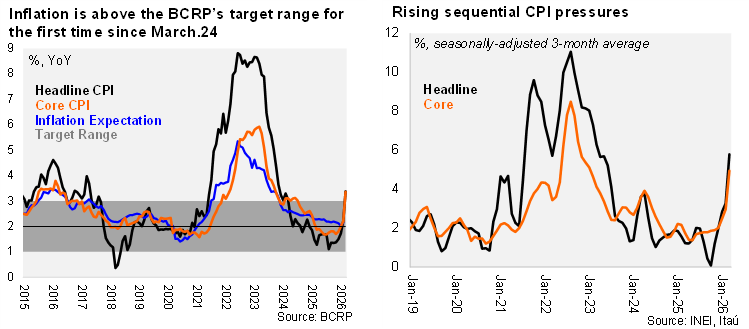
On an annual basis, headline inflation increased by 159 bp to 3.8% YoY, breaching the 2% ± 1% target range for the first time since March 2024. Core inflation excluding food and energy rose by 142 bp to 3.36% YoY, also moving above the target band.
Sequential inflation pressures have intensified. Headline inflation reached a sizable 5.8% QoQ (SAAR) in 1Q26, up sharply from 2.0% in 4Q25, while core inflation climbed to 5.0% QoQ (SAAR), also well above the 2.0% recorded in the previous quarter.
Our take: The inflation backdrop has turned more challenging, largely reflecting renewed energy‑price pressures. The BCRP has acknowledged that inflation is likely to remain near the upper end of the 2% ± 1% target range over the medium term. While the impact of the Coastal El Niño weather phenomenon on food prices should be contained, the overall risk balance has shifted upward. Against this backdrop, we expect the policy rate to be left unchanged at 4.25% at next week’s meeting, as the central bank maintains a cautious stance amid a closed output gap, elevated geopolitical risks, and deteriorating inflation momentum.